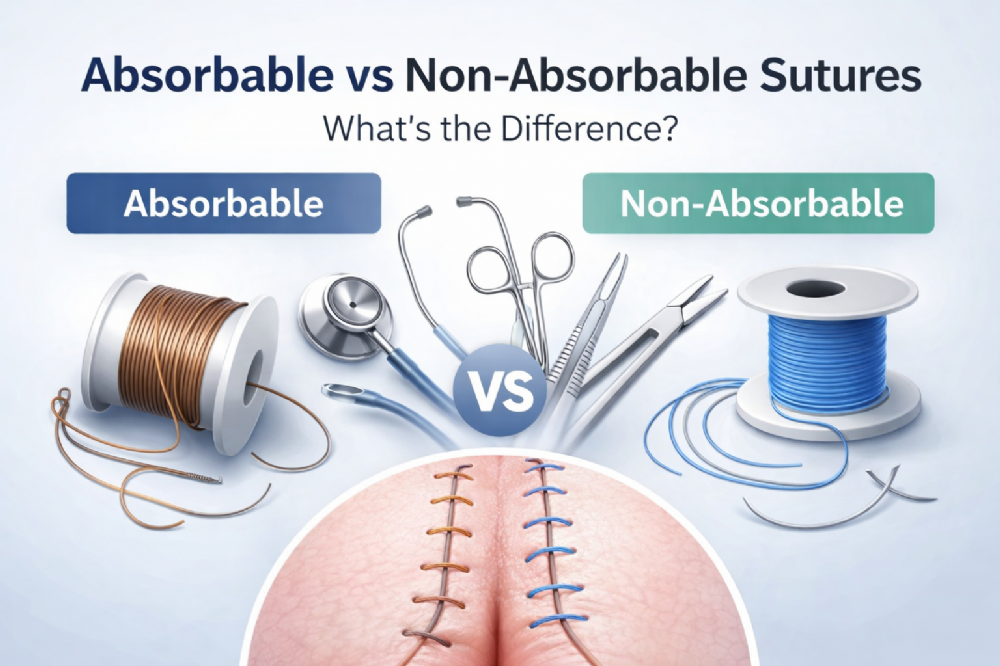
Absorbable vs Non-Absorbable Sutures – Clinical Differences & Selection Guide (DS-GUIDE-ABSORBABLE-VS-NONABSORBABLE)
Please enquire
Buy DS-GUIDE-ABSORBABLE-VS-NONABSORBABLE - Absorbable vs Non-Absorbable Sutures – Clinical Differences & Selection Guide online from us for just Please enquire, contact us for bulk and wholesale orders.
A clear clinical guide explaining the differences between absorbable and non-absorbable sutures, including materials, absorption profiles, indications and how to select the correct suture for dental procedures.
Introduction
Choosing the correct suture material is essential for predictable healing, tissue stability and patient comfort. The primary distinction in suture selection is whether the material is absorbable or non-absorbable.
Each type serves a distinct biological purpose depending on tissue type, healing time and clinical objective.
What Are Absorbable Sutures?
Absorbable sutures are designed to break down naturally within the body over time. Degradation occurs through hydrolysis in synthetic materials or enzymatic digestion in natural materials. These sutures gradually lose tensile strength before being fully resorbed.
Common Absorbable Materials
- Polyglycolic Acid (PGA)
- Polyglactin 910
- Polydioxanone (PDO)
- Poliglecaprone 25
- Chromic Gut
When to Use Absorbable Sutures
- Internal soft tissue closure
- Intraoral procedures
- Situations where suture removal is impractical
- Paediatric procedures
- Patients unlikely to attend follow-up removal
Advantages
- No removal appointment required
- Improved patient comfort
- Predictable strength loss profile
Considerations
- Strength reduces over time
- Not suitable where long-term wound support is required
What Are Non-Absorbable Sutures?
Non-absorbable sutures are not broken down by the body and remain in place until removed or permanently retained. They are manufactured from synthetic or natural materials designed to provide long-term tensile stability.
Common Non-Absorbable Materials
- Polypropylene
- Nylon
- Polyester
- Silk
When to Use Non-Absorbable Sutures
- Skin closure
- High-tension wounds
- Implant procedures
- Situations requiring extended wound support
Advantages
- High tensile strength
- Long-term tissue support
- Minimal degradation over time
Considerations
- Usually requires removal
- May cause mild discomfort during removal
Key Clinical Differences
Absorbable Sutures
- Degradation: Yes
- Removal required: No
- Long-term support: Limited
- Best suited for: Internal or intraoral applications
Non-Absorbable Sutures
- Degradation: No
- Removal required: Usually
- Long-term support: Excellent
- Best suited for: External or high-tension wounds
How to Choose the Right Suture
Selection depends on:
- Tissue type
- Expected healing time
- Wound tension
- Infection risk
- Patient compliance and follow-up
Absorbable sutures are often preferred where suture removal is unnecessary. Non-absorbable sutures remain the preferred option when extended tensile strength and long-term support are required.
Conclusion
Understanding the structural and biological differences between absorbable and non-absorbable sutures allows clinicians to optimise healing outcomes and improve patient experience.
Selecting the correct suture material is a clinical decision that directly impacts tissue response and procedural success.
Loading...
Loading...