What Is the Difference Between Monofilament and Braided Sutures? (MS-GUIDE-MONOFILAMENT-VS-BRAIDED-009)
Please enquire
Buy MS-GUIDE-MONOFILAMENT-VS-BRAIDED-009 - What Is the Difference Between Monofilament and Braided Sutures? online from us for just Please enquire, contact us for bulk and wholesale orders.
A clear comparison of monofilament and braided sutures explaining structural differences, infection risk, knot security, tissue reaction and common clinical applications across surgical and dental procedures.
What Is the Difference Between Monofilament and Braided Sutures?
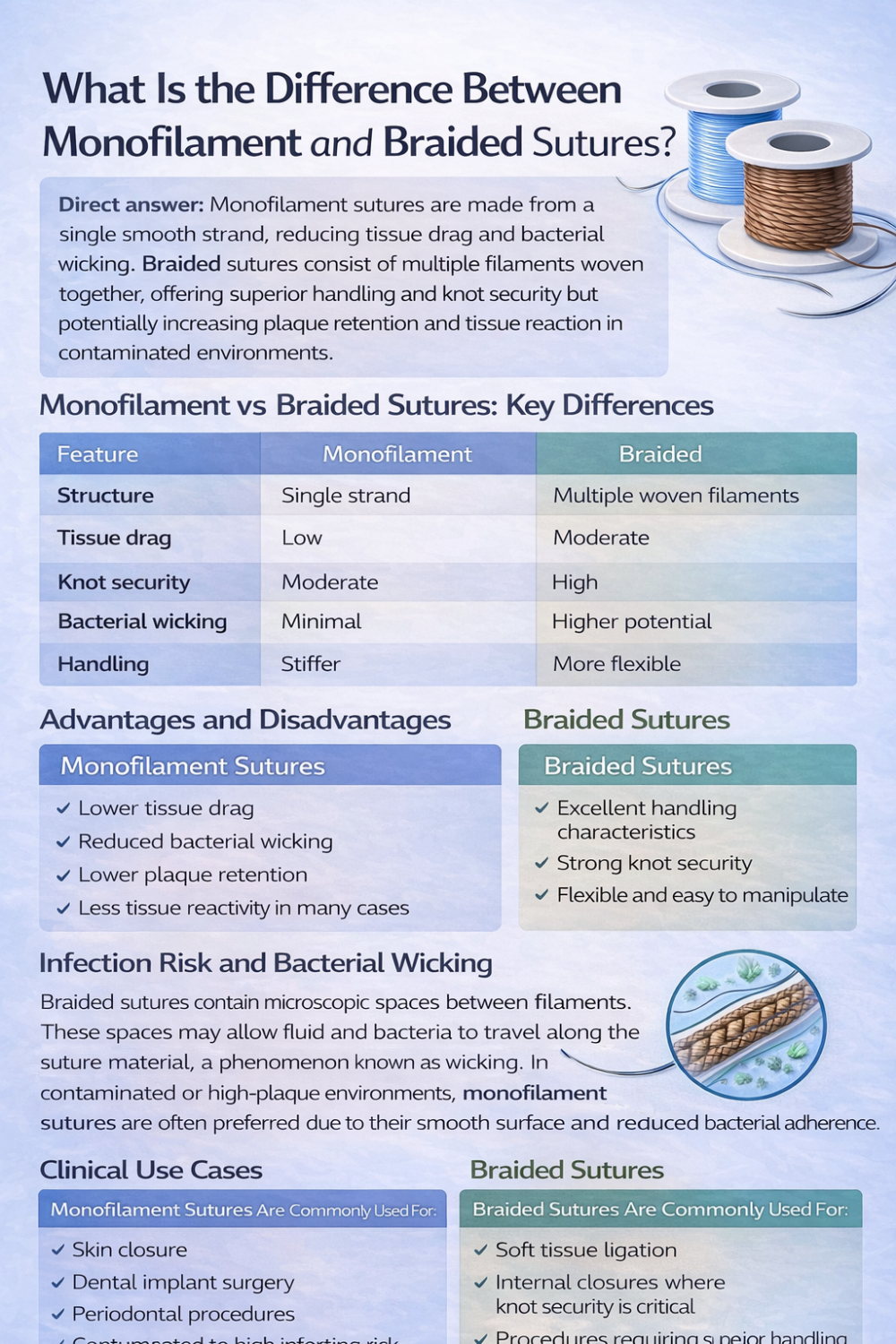
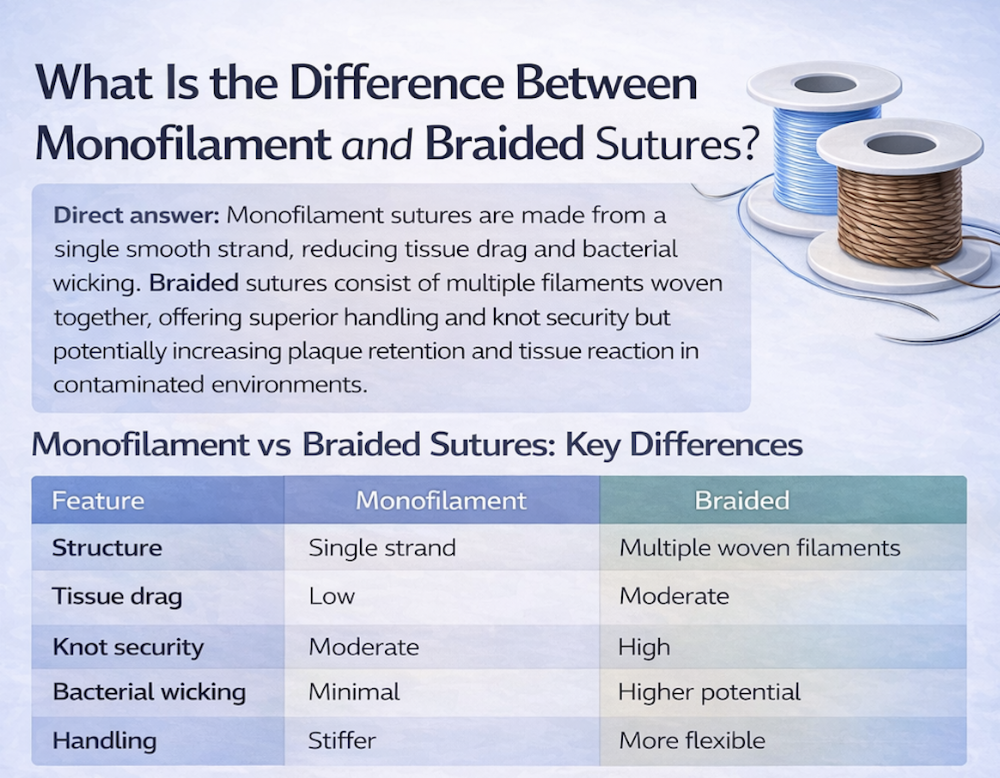
Direct answer: Monofilament sutures are made from a single smooth strand, reducing tissue drag and bacterial wicking. Braided sutures consist of multiple filaments woven together, offering superior handling and knot security but potentially increasing plaque retention and tissue reaction in contaminated environments.
Monofilament vs Braided Sutures: Key Differences
| Feature | Monofilament | Braided |
|---|---|---|
| Structure | Single strand | Multiple woven filaments |
| Tissue drag | Low | Moderate |
| Knot security | Moderate | High |
| Bacterial wicking | Minimal | Higher potential |
| Handling | Stiffer | More flexible |
Advantages and Disadvantages
Monofilament Sutures
- Advantages:
- Lower tissue drag
- Reduced bacterial wicking
- Lower plaque retention
- Less tissue reactivity in many cases
- Disadvantages:
- May require additional throws for knot security
- Can be stiffer and harder to handle
Braided Sutures
- Advantages:
- Excellent handling characteristics
- Strong knot security
- Flexible and easy to manipulate
- Disadvantages:
- Higher risk of bacterial wicking
- Potential for increased tissue reaction
Infection Risk and Bacterial Wicking
Braided sutures contain microscopic spaces between filaments. These spaces may allow fluid and bacteria to travel along the suture material, a phenomenon known as wicking. In contaminated or high-plaque environments, monofilament sutures are often preferred due to their smooth surface and reduced bacterial adherence.
While proper surgical technique and wound care are critical, material structure can influence infection risk in certain clinical situations.
Clinical Use Cases
Monofilament Sutures Are Commonly Used For:
- Skin closure
- Dental implant surgery
- Periodontal procedures
- Contaminated or high-infection-risk wounds
Braided Sutures Are Commonly Used For:
- Soft tissue ligation
- Internal closures where knot security is critical
- Procedures requiring superior handling characteristics
Conclusion
The difference between monofilament and braided sutures lies primarily in structure. Monofilament sutures reduce bacterial wicking and tissue drag, while braided sutures offer improved handling and knot security. The appropriate choice depends on the clinical objective, infection risk and tissue environment.
Loading...
Loading...