Medical Sutures, Unit 7, Latham Road Business Park, Latham Road, Huntingdon, Cambridgeshire, PE296YE
Customer Care:
Email: hello@medicalsutures.co.uk
 Medical Sutures
Please enquire
Buy MS-GUIDE-FACIAL-SUTURES-013 - Best Sutures for Facial Surgery | Cosmetic Closure Guide online from us for just Please enquire, contact us for bulk and wholesale orders.
A clinical guide to suture selection in facial surgery covering recommended sizes, cosmetic considerations, removal timing and techniques to optimise aesthetic wound healing outcomes.
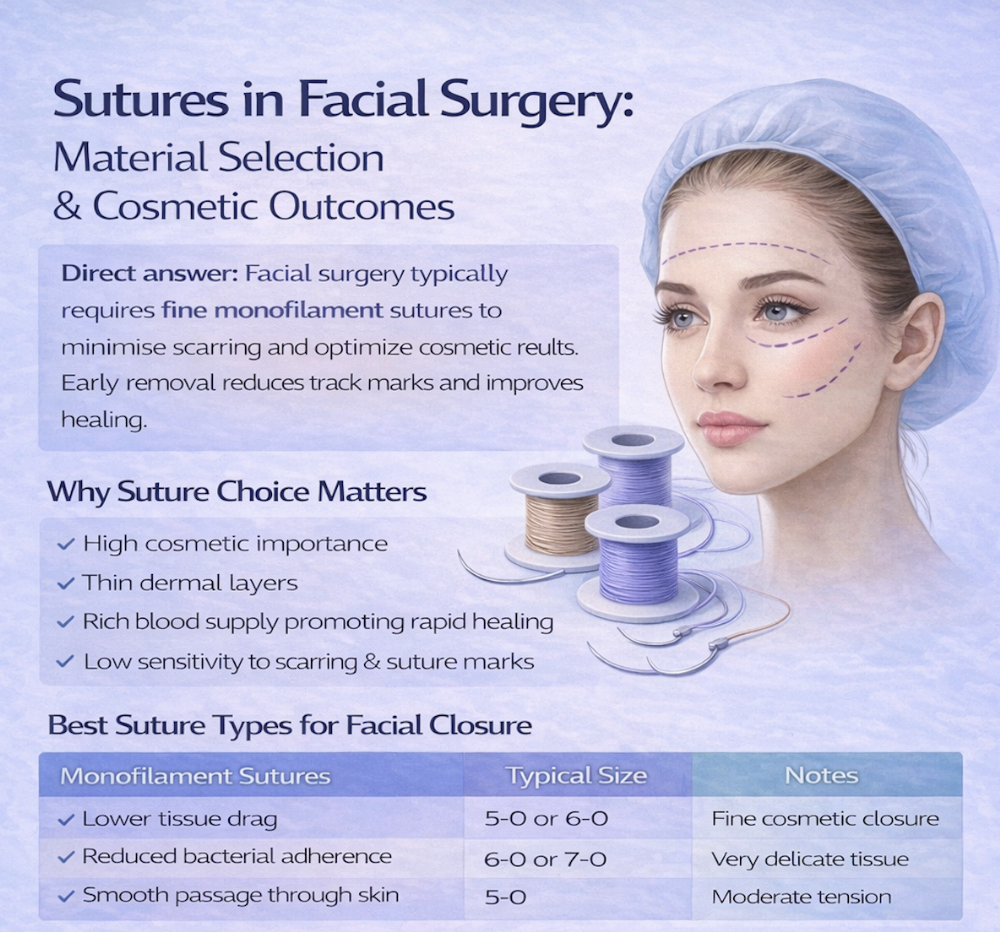
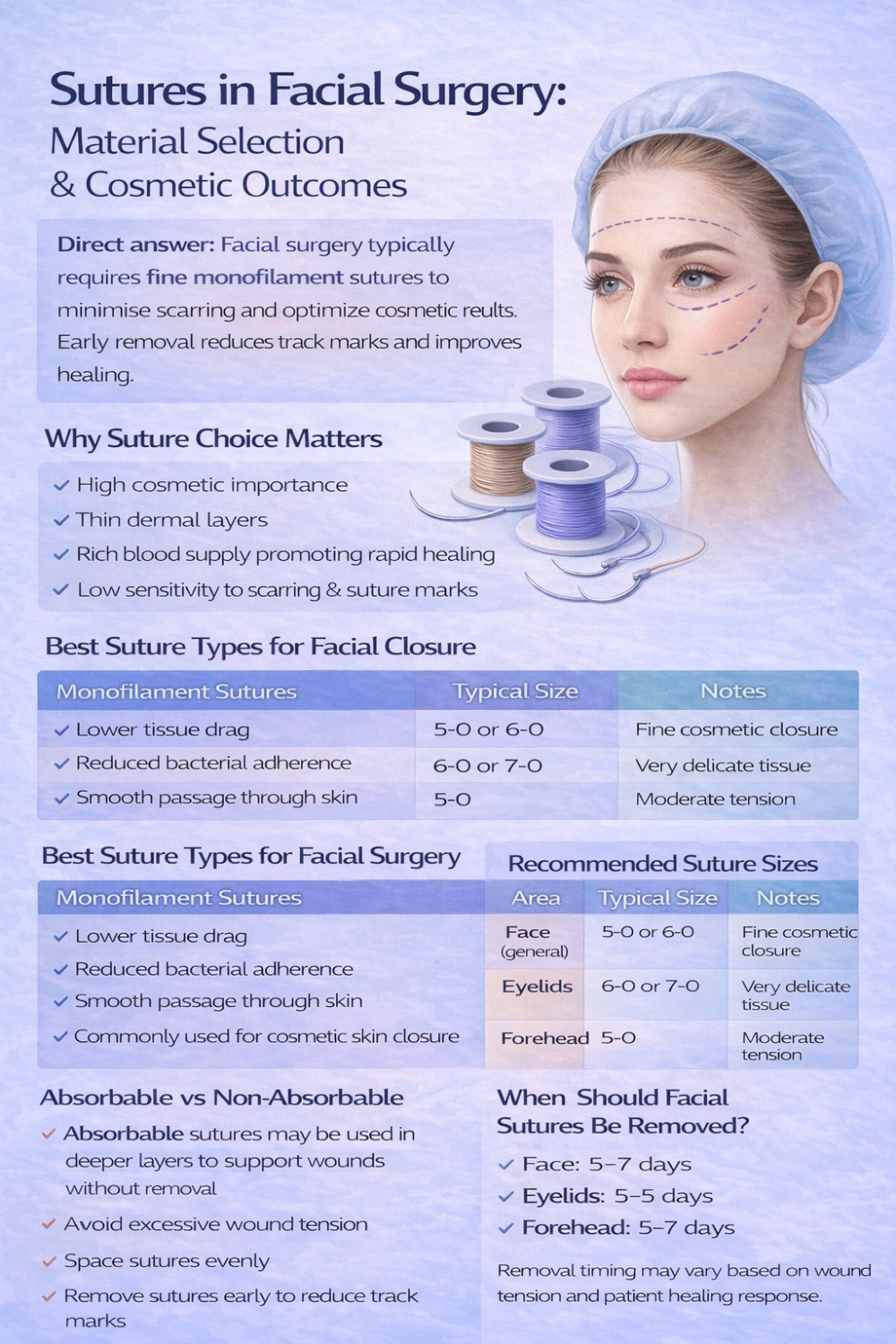
Direct answer: Facial surgery typically requires fine monofilament sutures to minimise scarring and optimise cosmetic results. The smallest diameter suture that provides adequate wound support is generally preferred, with early removal reducing track marks and visible scarring.
The face has high vascularity and cosmetic sensitivity. Wound edge precision, minimal tissue trauma and controlled tension are critical to achieving optimal aesthetic outcomes.
Non-absorbable sutures such as nylon or polypropylene are frequently used for epidermal closure and removed early to reduce visible scarring.
Absorbable sutures may be used in subcuticular or deep dermal layers to eliminate removal appointments and support deeper wound stability.
| Area | Typical Size | Notes |
|---|---|---|
| Face (general) | 5-0 or 6-0 | Fine cosmetic closure |
| Eyelids | 6-0 or 7-0 | Very delicate tissue |
| Forehead | 5-0 | Moderate tension |
Early removal is especially important in facial procedures to minimise visible suture marks and optimise scar appearance.
Removal timing may vary based on wound tension and patient healing response.
Facial surgery demands careful suture selection to balance wound stability with cosmetic outcome. Fine monofilament sutures in smaller diameters are commonly preferred, with early removal playing a key role in minimising scarring and achieving optimal aesthetic results.
Loading...
Loading...