Medical Sutures, Unit 7, Latham Road Business Park, Latham Road, Huntingdon, Cambridgeshire, PE296YE
Customer Care:
Email: hello@medicalsutures.co.uk
 Medical Sutures
Please enquire
Buy MS-GUIDE-USP-SUTURE-SIZES-001 - What Do Suture Sizes Mean? USP & Metric Suture Size Guide Explained online from us for just Please enquire, contact us for bulk and wholesale orders.
A clear guide explaining USP and metric suture sizing systems, including diameter meaning, size comparisons and a practical chart to help clinicians select the correct surgical suture size.
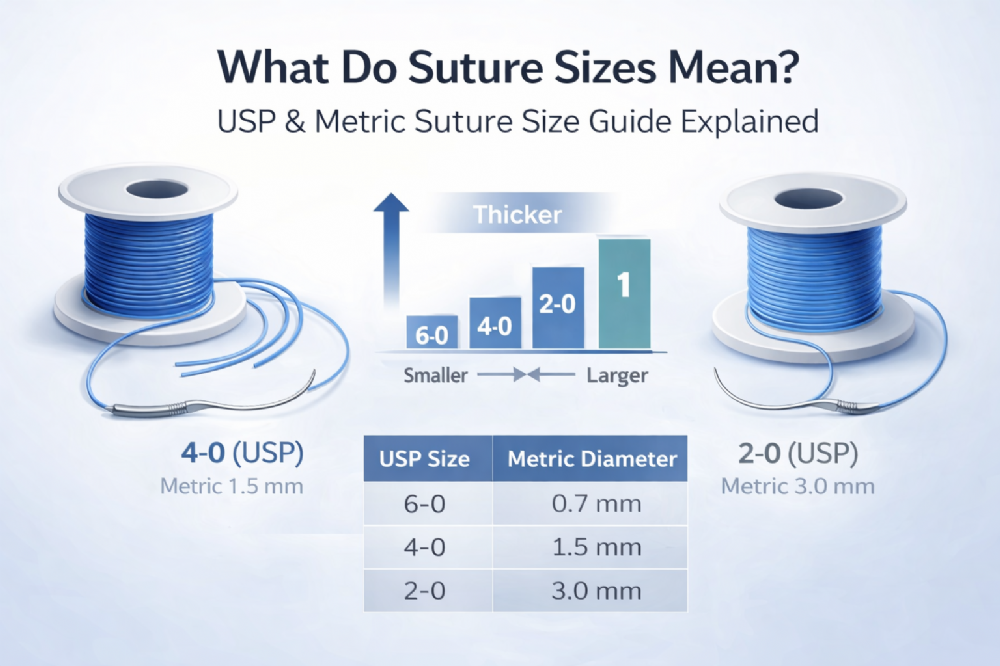
Quick answer: Suture sizes follow the USP (United States Pharmacopeia) system. The more zeros in the size (for example 6-0), the smaller the suture diameter. Larger numbers without zeros (for example 1 or 2) indicate thicker sutures. Metric sizing provides the diameter in tenths of a millimetre.
The USP sizing system is the most widely used suture measurement standard. In this system:
The metric system represents suture diameter in tenths of a millimetre. For example:
Metric sizing provides a more direct indication of physical thickness and is commonly displayed alongside USP sizing on packaging.
| USP Size | Metric Size | Common Uses |
|---|---|---|
| 8-0 | 0.4 | Microsurgery |
| 6-0 | 0.7 | Facial closure, delicate tissue |
| 4-0 | 1.5 | Skin closure, general surgery |
| 2-0 | 3.0 | Muscle and fascia |
| 1 | 4.0 | High-tension closure |
Choosing the correct size depends on:
In general, use the smallest diameter suture that will adequately support the tissue during healing. Finer sutures reduce tissue trauma and improve cosmetic results, while thicker sutures provide greater tensile strength.
Understanding suture sizing ensures appropriate wound support while minimising tissue trauma. The USP system decreases in diameter as zero numbers increase, while the metric system reflects diameter in tenths of a millimetre. Selecting the correct size is a critical clinical decision that directly influences healing outcomes.
Loading...
Loading...